


As we move through the second half of 2026, our team remains dedicated to providing insight, perspective, and clarity amid an evolving market, economic, and political environment. While headlines and market narratives continue to shift, our focus remains on helping you stay informed and confident in the decisions that impact your financial future. In this quarter's edition of The Inside Scoop, you'll find timely market commentary, important upcoming dates, and recent articles from Baird Trust and Bull & Baird designed to provide perspective and support thoughtful investment decision-making.
We’re grateful for the continued trust you place in our team. Our goal is to keep you informed, prepared, and supported through every stage of your financial journey. If there’s anything you’d like to discuss in greater detail, we’re always here to help.
Yaz, Justin, Karley, Ashley & Whitney
.

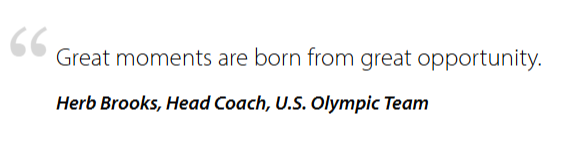
As America approaches its 250th anniversary, it is worth remembering that our nation’s history has never been one of uninterrupted peace or prosperity. There have been plenty of challenges and setbacks along the way.
Yet time and again, we have found a way forward. Let’s talk about a group of dreamers who shocked the World.
I submit that the Miracle on Ice, on February 22, 1980, was one of the most meaningful moments in modern U.S. history. It was not just a hockey game, but a cultural touchstone that changed the way America thought about itself as it entered a new era.
At a time of doubt and division, that victory sparked pride, renewed hope, and reminded us who we are. It was more than a win; it became a symbol of courage, teamwork, and the American spirit.
That same spirit shows up far beyond sports. Jeff Bezos once said that the secret to American innovation, and its incredibly successful companies, is “risk capital.”
“It’s not our banking system. Europe has a good banking system. It’s that you can raise $50 million of seed capital for an idea that may have a 10% chance of succeeding. That’s crazy. Other nations have a very hard time replicating it.”
The same idea was at the heart of the Miracle on Ice. The U.S. team did not take the ice because the odds were in its favor. They took the ice because they believed there was still a path to win, and they were willing to risk everything to pursue it.
American innovation has always followed a similar logic.
America has long rewarded entrepreneurs and risk-takers.From our founders through figures like Walt Disney and Amelia Earhart, there is a recurring willingness in this country to take risks, build new things, and change the world. The internet, the airplane, the microchip, the telephone, the light bulb, and the assembly line, to name a few, were all created or advanced here and helped shape the future.
Here’s the best part: this happens regardless of who is in the White House or what is happening in the world. Howard Schultz helped transform a coffee company in Seattle, Washington, after joining Starbucks in the early 1980s. He did not wait for the perfect political or economic backdrop. He had an idea and pursued it.
He found investors and helped build a multibillion-dollar company around a product that had existed in Europe for centuries. It is just one example of American ingenuity, persistence, and risk-taking.
In the past 50 years, the United States has created 241 companies from scratch that are now worth more than $10 billion in market capitalization. That same number for Europe is 14.
Nvidia, Apple, Google, Chipotle, and Costco did not exist 50 years ago. Now, in 2026, we have Anthropic, SpaceX, and OpenAI. The capacity for American innovation remains extraordinary.
As the players sat in the locker room that day, knowing they were up against a formidable opponent, I imagine one thought was going through their minds.
We can win.
At their core, they were optimists. That optimism, paired with hard work, paid off in a moment we still talk about 46 years later.
Think of the American people over the last 250 years:
- The founders of this nation wanted to do something the world had never seen.
- The inventors and entrepreneurs of this nation wanted to build the future.
- The citizens of this nation wanted a better life for their families and were willing to invest their hard work and money to get it.
- The soldiers of this nation wanted to protect us all.
The thread that runs through all of them is optimism about the future: the belief that even when things seem challenging or chaotic, we can solve problems and move toward a brighter future.
Optimism about America helped turn a young country into one of the greatest nations in history, and it can continue to carry us forward for generations to come.
The “Miracle of America” is that, even through the chaos of our past, our resilience has helped us emerge as a global leader, a dominant economic power, and a historic creator of wealth.
On the 250thanniversary of our nation, that story is worth remembering. Not as a guarantee that the future will be easy, but as a reminder that optimism, innovation, and perseverance can continue to move us forward.

 .
.
.
Our team exists to come alongside you in your wealth journey as we do not believe in a one sized fits all approach when it comes to your future. In order for us to serve you to the best of our ability, we ask that you keep a few things updated along the way.
Taxes
After filing, send us your tax return. Every year. It's that easy. Our team will then do a thorough analysis.
We will discuss implications and scenario-based decisions personalized to you and your family.
Tax Planning Perspective VIDEO
Estate Documents
It is imperative that you update us when there are material changes to your will, power of attorney, and other directives. No one wants to think about the worst-case scenario, however, keeping our team informed of any updates ensures a smooth transition if/when it was to happen.
Estate Planning Perspectives VIDEO
Insurance
Start the conversation and keep us updated on your current plan.
Whether it be a whole life policy review, health or property insurance referrals, we will review your current situation and connect you with the best resource to mitigate risk.
360 Wealth
Log in to the Baird Online app. At a minimum, link the basics. (mortgage, 401(k), loans and bank accounts).
Your accounts will auto-update and will feed into your financial plan for a 360 view & precise financial advice. It is important to keep us informed of any outside accounts as we periodically review your long-term goals.
.

A Comprehensive Guide to Charitable Giving Strategies
For many, charitable giving is driven by deeply personal values – but the decisions that surround it aren’t always simple. With so many ways to give and tax rules to consider, it can be difficult to know where to start.
Below is a guide that breaks charitable giving down into its core building blocks –what you can giveand how you can do it– so you can understand your options and approach giving with greater confidence.
What You Can Give
There are many ways to support the causes you care about, and the type of asset you give can shape both your impact and your overall financial picture.
Cash
While cash donations are often the simplest and most familiar way to support charitable organizations, they are typically the least tax efficient. Cash gifts – whether made by check, electronic payment or credit card – are immediately usable by the organization, which can be helpful when organizations are addressing urgent needs. For donors who make smaller, recurring contributions, cash can still play a role in a broader giving strategy. However, it’s just one of many options available – and giving other assets may offer additional benefits, like greater tax efficiency or the ability to amplify your impact over time.
Securities
- Appreciated Stock
Once you’ve held investments for more than 12 months and they’ve increased in value since they were purchased, you can gift those shares directly to charity. Rather than selling the investment first and donating the proceeds, giving shares allows the organization to sell the holding itself – so more of the value can go toward supporting its mission, rather than being reduced by capital gains taxes before the gift is made.
Gifting appreciated stock can be especially effective when you want to support charitable causes without drawing down your cash reserves. And because the value of the stock is based on its current market value, this approach may also increase the charitable deduction you’re able to claim.
- Mutual Funds
- Similar to appreciated stock, donating mutual fund shares follows the same general principles around giving shares rather than cash. Unlike individual stocks, though, mutual fund gifts are typically processed through the fund company that holds the investment, which can influence whether a charity can accept the shares and how the transfer is handled.
- Employee Stock
- If you’ve been participating in an employee stock purchase plan (ESPP) or another form of company stock ownership, those shares can also be donated to charity. Often, these holdings are owned for more than 12 months – and may grow into a larger-than-intended portion of your overall investment mix. Because of this, donating employee stock can help you support a charity while addressing concentration in your portfolio.
Tangible Assets
Assets like real estate, vehicles, artwork or other personal propertycan also be donated to charity. From a tax perspective, tangible assets are treated differently than cash or stock. Depending on the type of property and the organization receiving it, the charitable deduction may be limited and is often not based on the asset’s full fair market value. However, unused deductions may be carried forward to future years. Because of these differences, donating tangible assets may be more effective when considered as part of a broader charitable plan than as a simple one-time gift.
How You Can Give
Charitable giving decisions often involve more than choosing what to give – timing and structure play a key role as well.
Strategies
These approaches focus on timing your gifts to better align with your income, tax deductions and goals.
- Bunching
Bunching is a charitable giving strategy that involves combining multiple years’ worth of donations into a single year. Rather than giving the same amount to charity every year, you would make a larger gift in one year and give less – or none at all – in the following year or years. By doing this, you can make your donations exceed the standard deduction in the year of the larger gift, allowing you to itemize your deductions (and potentially reduce your taxable income). Then, you can take the standard deduction the next year.
If you consistently give to charity, but don’t consistently itemize your deductions, this strategy could prove effective for you. Especially after the most recent reconciliation bill permanently increased the standard deduction, fewer people may be able to itemize each year. This makes bunching more relevant for maximizing the impact of your charitable gifts without increasing the total amount you give.
- Qualified Charitable Distributions (QCDs)
When you donate through a QCD, you send money directly from your IRA to a qualified charity. You can do this once you reach age 70 ½. When you make a gift this way, the amount you donate is excluded from your taxable income – so you don’t even need to itemize your deductions to receive a tax benefit.
Another perk of QCDs is that they can count toward satisfying your required minimum distribution (RMD)for the year. In 2026, you can give up to $111,000 per year through QCDs – though gifts must be made directly to a public charity, as donations to donor-advised funds or private foundations do not qualify.
Structures
In some cases, charitable giving can best be done through dedicated accounts that help organize and distribute gifts over time.
- Donor-Advised Funds (DAFs)
A donor-advised fund is a charitable account you create with a sponsoring organization that holds cash or other assets until they are distributed to charities. Once you contribute assets to a DAF, they are invested and held over time by the sponsor. Then, you can recommend distributions from the account to eligible charities, and the sponsoring organization reviews those requests and, in most cases, sends the funds to the charities you’ve recommended.
Contributions to a DAF are treated as charitable gifts in the year the assets enter the fund, even though the money may be distributed to charities later. This can make DAFs an effective option if you want to be intentional about the timing of your charitable deductions, support organizations over multiple years or coordinate giving with other strategies like bunching.
- Private Foundations
A private foundation is a charitable trust or nonprofit corporation – primarily funded by you or your family – that holds your assets and makes donations directly to organizations. When you contribute assets to a private foundation, they move out of your taxable estate and into the foundation, which you or your family oversee. The foundation then distributes the funds to charities according to its guidelines.
While assets donated to a private foundation are only deductible for up to 30% of your adjusted gross income (AGI), the foundation’s officers (likely your family) have full discretion over where the donations go – and they’re not limited to 501(c)(3) charities. Because of this, they may be effective for families who want a high degree of control over how their charitable assets are invested and distributed – and can become part of a long-term charitable giving plan.
- Charitable Remainder and Charitable Lead Trusts (CRTs and CLTs)
Charitable Remainder and Charitable Lead Trusts are trusts that allow your assets to benefit both charities and other beneficiaries over time. When you contribute assets to one of these trusts, they move out of your taxable estate and are managed according to the trust’s terms. With a CRT, income is paid to you or another beneficiary over a set period of time, and the remaining assets are distributed to charity. With a CLT, charities receive the distributions first – and the remaining assets pass to your beneficiaries at the end of the trust term.
Because these trusts can allow appreciated assets to be sold without an immediate tax hit, they can be effective if you want to support charitable causes while still receiving income for your family.
When it comes to charitable giving, no single strategy is right for every situation. Factors like your income, tax considerations, timing and long-term goals all play a role in determining which approaches may work best for you. Adding to that complexity, tax laws are always changing. By working with your Baird Financial Advisor team, you can explore the available options, stay up to date with legislation and choose a strategy that aligns with the causes you care about and your broader financial picture.

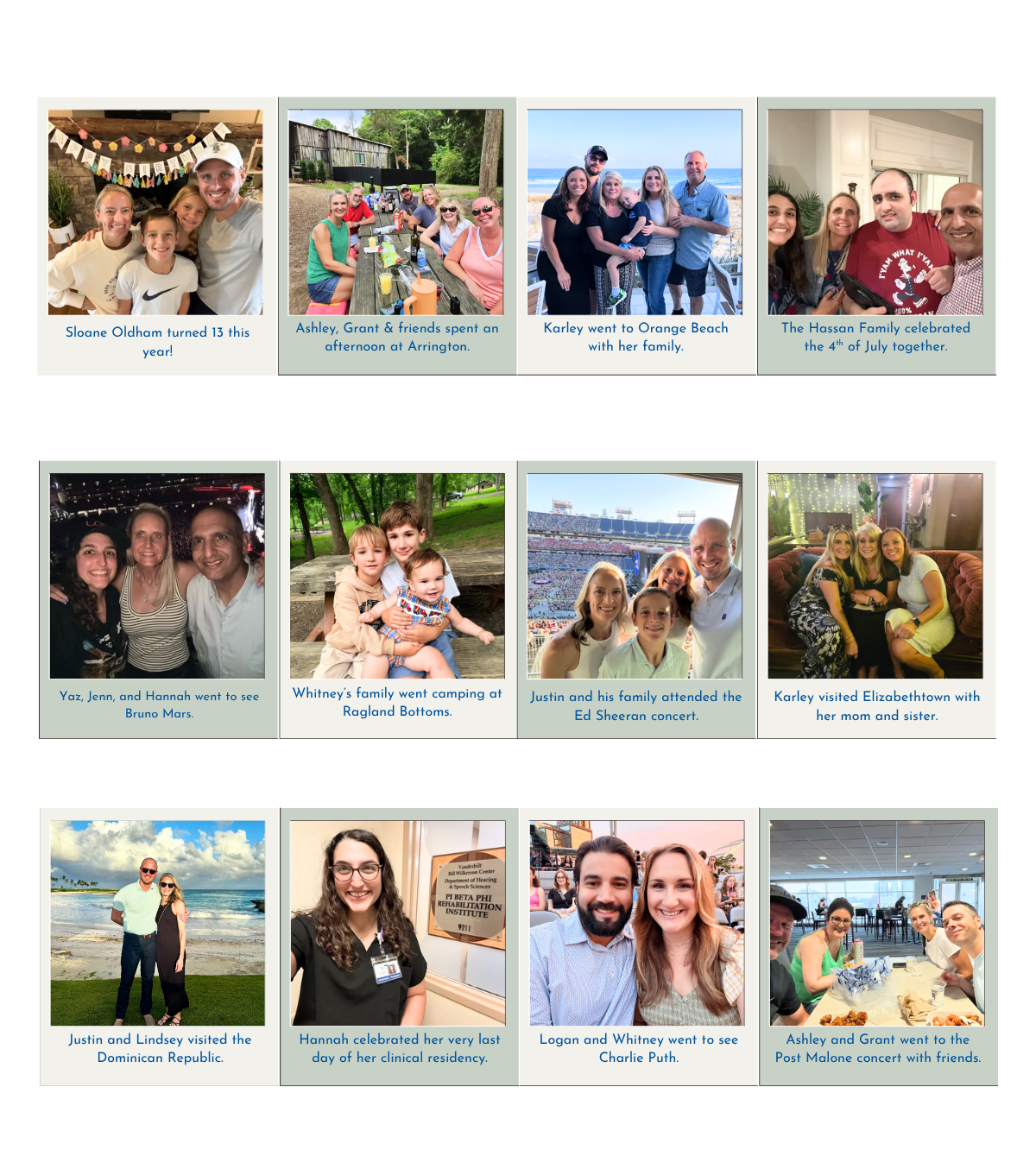
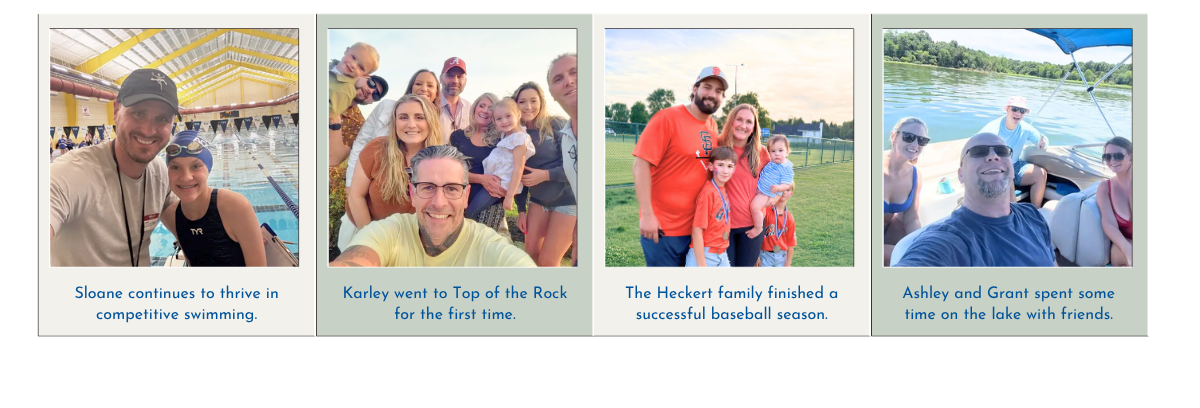
We share our lives with you because you are an extension of our family. Long-term relationships which encourage open and honest communication have been the cornerstone of our team's success for many years. Thank you for allowing us to walk alongside you and your family.
.
Today’s investment environment is dynamic – filled with tremendous opportunity but also pockets of elevated risk. The challenge for investors is to gauge their own comfort with that tradeoff: How much risk are you willing to take to capitalize on the biggest potential opportunities? In other words, knowing who you are as an investor, and staying true to your strategy, matters more today than in most periods of the past.
We believe the most important aspect of any investment strategy is a clear, realistic understanding of how much risk is actually being taken. That is especially true during periods of elevated optimism and exuberance, which are often precisely when risk is most elevated. Strong bull-market returns generate excitement, and investors tend to let their guard down at the very moment they should do the opposite. We think the current period is one of those times and that not much thought is being given to downside risk today.
Investor Exuberance
It is easy to understand the exuberant mood. Over the last three calendar years, the S&P 500 compounded at approximately 23% annually, more than double the long-term average for the stock market. Just this quarter, the S&P 500 soared over 15%, marking its largest quarterly advance in six years. On top of that, the excitement surrounding the rollout of AI as a powerful new technology platform is sending investor expectations soaring, with the Nasdaq Composite up 22% and the PHLX Semiconductor Index up 89% in the second quarter.
The massive gains in semiconductor stocks and the recent nearly $2 trillion IPO of SpaceX reflect the unbridled optimism of many investors. And more AI-related IPOs are likely on the way, with OpenAI and Anthropic expected to command nearly $1 trillion valuations when they reach the public markets. Valuations this high for companies this early in their public lives are largely unprecedented, yet investors seem to be clamoring for more.
Which Game Are You Playing?
Many different strategies are at work in the markets today, spanning a wide spectrum: short- to long-term horizons, growth to value, trading to investing, momentum to fundamentals, active to passive, aggressive to conservative, high quality to low. There are countless ways to slice it, but we believe the most important distinction today is simpler: those who try to reduce downside risk, and those who do not. In an environment of elevated opportunity and risk, knowing where you fall on that spectrum matters more than ever. There is no single “correct” way to invest, but for us, working to reduce downside risk is central to long-term success.
Two Rules of Investing
Warren Buffett famously said, in a 1985 interview onAdam Smith’s Money World, that “The first rule of investment is don’t lose [money]. And the second rule of investment is don’t forget the first rule. And that’s all the rules there are.” His best-known aphorism is as true today as ever. Buffett is not referring here to the downward volatility of stock prices – the temporary, quotational loss that can occur to any stock on any day the market is open. He is referring to the permanent loss of capital that comes from the destruction of a business’s underlying intrinsic value. If your objective is to compound and grow wealth for years into the future, avoiding losses is critical. The simple math of compounding works against an investor who must first make up large losses before even thinking about gains.
Our Strategy Heeds the Two Rules
At Baird Trust, we have followed a strategy for more than 30 years designed to minimize the chance of permanent loss of capital. We aim to reduce risk by investing only in very high-quality businesses with a sustainable competitive advantage we can identify and understand – a durable advantage lowers the business risk of each company we own. We also assess management and corporate culture, because leaders who allocate capital carefully – protecting and growing the company’s advantages while fostering a healthy culture – further reduce risk. Finally, we strive to buy these businesses at a discount to what we believe they are worth, building in a margin of safety at the time of purchase.
This time-tested process is designed not only to compound your money at attractive rates over the long term, but also to minimize the chance of permanent loss along the way. Upside and downside are interrelated, yet today the upside seems to be getting all the attention. Weighing the downside is essential, and in some corners of the market it is nearly absent right now.
Because of this posture, we will, from time to time, miss out on apparently easy short-term gains. That has happened many times over our 30-plus-year history, and it is certainly happening in places today. Holding this line is most uncomfortable precisely when others appear to be profiting easily. However, that discomfort is the price of a risk-first mindset, and we believe that mindset is essential to compounding wealth over decades.
Preparing, Not Predicting
This is a moment of genuine opportunity and risk, driven by the innovation and adoption of AI across the economy. Investors are excited and carry high expectations – it is fair to say the animal spirits are alive and well. Because of that enthusiasm – and our belief that the future is unknowable, with a wide range of possible outcomes – we think it is more important than ever to build in some downside protection before reaching for return.
This is not a prediction of any kind about the direction of the market. We have no idea (and never have had any idea) whether stocks are headed higher, lower, or sideways over the near or intermediate term. We are simply observing that some investors appear to be grasping aggressively for high returns with little regard for the risk involved. We don’t like that tradeoff.
At Baird Trust, risk mitigation through our disciplined process is our non-negotiable starting point. Helping you grow your wealth through all kinds of market cycles, for many years into the future, is our singular objective. We are grateful for the trust you place in us, and we embrace the responsibility of serving as stewards of your assets as we help you pursue your long-term goals.


