


.
As we continue through 2026, our team remains focused on providing perspective and clarity amid an environment filled with competing headlines and rapidly shifting narratives. Markets, geopolitics, and emerging investment trends can feel noisy and, at times, confusing. Our goal is to help cut through that noise and focus on what truly matters to long‑term investors.
In this quarter’s edition of All That Matters, Mike and Ross address the questions we’re hearing most often from clients—ranging from heightened interest in IPOs, to ongoing geopolitical concerns, to areas of the market that warrant closer attention beneath the surface. You’ll also find thoughtful insight into how markets respond (or don’t respond) to headlines, and how disciplined investors can remain grounded when uncertainty feels elevated.
We’re grateful for the continued trust you place in our team. Our commitment is to keep you informed, prepared, and supported through every stage of your financial journey. As always, if there’s anything you’d like to discuss in more detail, we’re here.
Yaz, Justin, Karley, Ashley & Whitney
.
All That Matters: Hype and Hidden Risks
There’s no shortage of high‑profile headlines right now – from SpaceX’s record-breaking IPO to growing concerns around private credit and the rapid rise of prediction markets. In this edition of All That Matters, Mike and Ross answer real client questions and focus on how investors can think clearly when the news cycle feels anything but calm.
Mike: It’s April, the Masters have just wrapped up, and the market feels quiet. That might sound strange given everything happening in the world, but that’s exactly the point. Despite nonstop headlines, the stock market has been largely flat. When markets don’t move the way the news suggests they should, it creates confusion – and that’s usually when questions start rolling in. So this month, we opened the mailbag and tackled what clients are actually asking.Ross: That disconnect between headlines and markets is uncomfortable for a lot of people. We’re wired to expect big reactions when big things happen. But markets don’t respond to noise – they respond to fundamentals, expectations, and what ultimately affects earnings and inflation. When those factors don’t change dramatically, markets often don’t either, even if the world feels chaotic.
.
IPO Investing
Mike: One of the most common questions we’re getting right now is about IPO investing – especially with big names like SpaceX and Anthropic potentially setting record‑breaking debuts. The way I think about it always starts with time horizon: how long do you want to own the investment? That single question drives almost everything else. If you believe in a company’s long‑term prospects and it fits your risk tolerance, that can be a reasonable reason to consider it. Where people get into trouble is chasing excitement. Buying an IPO because it’s “hot,” hoping it pops, and planning to sell quickly isn’t investing – it’s speculation. For example, when Meta IPO’d, the stock fell sharply and at one point was down nearly 55% from its initial offering price.
Ross: History backs that up. IPOs are typically younger, riskier companies. In periods when IPOs are especially popular, long‑term returns have often been worse, not better. We saw it during the dot‑com era, and we saw it again with SPACs in 2021. Many companies came public without durable earnings power, and a lot of them struggled afterward. Patience matters. Not every great company has a great first year in the public markets – even one as high‑profile as SpaceX.
.
Current Thoughts on the Conflict
Mike: Another big question we’re getting is about our current thoughts on the conflict in the Middle East. It’s constantly evolving, and it’s difficult for anyone – regardless of credentials – to predict how it will ultimately unfold. From a market perspective, the key issue isn’t every headline. It’s oil. If major shipping routes are disrupted and oil prices rise sharply, that can feed inflation and push costs higher across the economy. That’s what markets tend to focus on. It’s also important to remember that geopolitical events come and go. History is full of them. Overreacting to each new development can often do more harm than good.
Ross: U.S. markets have actually been quite resilient so far. Corporate earnings have been strong, and stimulus from tax refunds has provided a meaningful boost. As we’ve said before, we’re better insulated than many of our global peers in situations like this. Setting expectations is critical. Markets experience pullbacks regularly, and even a 10% decline isn’t unusual. In fact, average drawdowns are often larger than what we’ve seen recently. Midterm years also tend to be more volatile, and that volatility should be part of the plan – not a reason to abandon it. Prepared investors don’t panic when markets wobble; they recognize it as part of the process.
.
What’s Worrying Us
Mike: The third and final question we’ve been hearing is: what are you worried about? People are often surprised by this answer, but what worries me most right now isn’t geopolitics – it’s private credit. Illiquid investments can be valuable in the right context, but they come with tradeoffs. When capital is locked up, investors lose flexibility. And while private markets aren’t immune to the same risks that affect public markets, they can be harder to navigate when stress shows up. Illiquidity doesn’t eliminate risk. It just changes how and when you experience it.
Ross: For me, another concern is the growth of prediction markets. They’ve exploded in popularity – from sports to politics to economics. My concern isn’t about any single platform, but about behavior. These markets encourage binary thinking and short‑term outcomes. That’s very different from long‑term investing, which relies on patience, diversification, and compounding over time. If you’re seeing these trends show up in your own decision‑making, or you’re unsure how they fit into your broader financial picture, that’s a great signal to reach out to your Baird Financial Advisor and talk it through before making a move.
.
.

BARRONS & FORBES AWARDS
We are proud to share that Yaz Hassan has been consistently recognized among the industry’s leading advisors, including being named a Barron’s Top 1500 Financial Advisor since 2013 and a Forbes Best‑in‑State Wealth Advisor since they began publishing in 2019. To us, that recognition is a reflection of how he leads: serving as a steady “quarterback”, he prioritizes planning, advocates for clients, and helps families align financial decisions with the values they want to pass on.
Separately, we are proud to share that Justin Oldham has been recognized as a Forbes Best‑in‑State Wealth Advisor for 2026. While awards are never the goal, this one reflects what we've seen for years. Justin leads like a coach—building trust, guiding families through real‑life decisions, and making the complex feel manageable.
Additionally, The Hassan Oldham Group has been honored by Forbes | SHOOK Research as a Best‑in‑State Wealth Management Team in 2025 & 2026, reflecting our team’s collective commitment to thoughtful planning, disciplined investment management, and long‑term client relationships.
2026 Barron’s Top 1500 Financial Advisors. Published 3/20/26, data as of 9/30/25.
2026 FORBES Best‑In‑State Wealth Advisors. Published 4/7/26, data as of 6/30/25.
2026 FORBES | SHOOK Research Best‑in‑State Wealth Management Teams. Published 1/7/26, data as of 3/31/25.
Barron's state-by-state ranking began as the Top 1,000 Financial Advisors, then expanded to 1,200 in 2014, and expanded again to 1,500 in 2026.
.
 .
.
.
Our team exists to come alongside you in your wealth journey as we do not believe in a one sized fits all approach when it comes to your future. In order for us to serve you to the best of our ability, we ask that you keep a few things updated along the way.
Taxes
After filing, send us your tax return. Every year. It's that easy. Our team will then do a thorough analysis.
We will discuss implications and scenario-based decisions personalized to you and your family.
Tax Planning Perspective VIDEO
Estate Documents
It is imperative that you update us when there are material changes to your will, power of attorney, and other directives. No one wants to think about the worst-case scenario, however, keeping our team informed of any updates ensures a smooth transition if/when it was to happen.
Estate Planning Perspectives VIDEO
Insurance
Start the conversation and keep us updated on your current plan.
Whether it be a whole life policy review, health or property insurance referrals, we will review your current situation and connect you with the best resource to mitigate risk.
360 Wealth
Log in to the Baird Online app. At a minimum, link the basics. (mortgage, 401(k), loans and bank accounts).
Your accounts will auto-update and will feed into your financial plan for a 360 view & precise financial advice. It is important to keep us informed of any outside accounts as we periodically review your long-term goals.
.
.

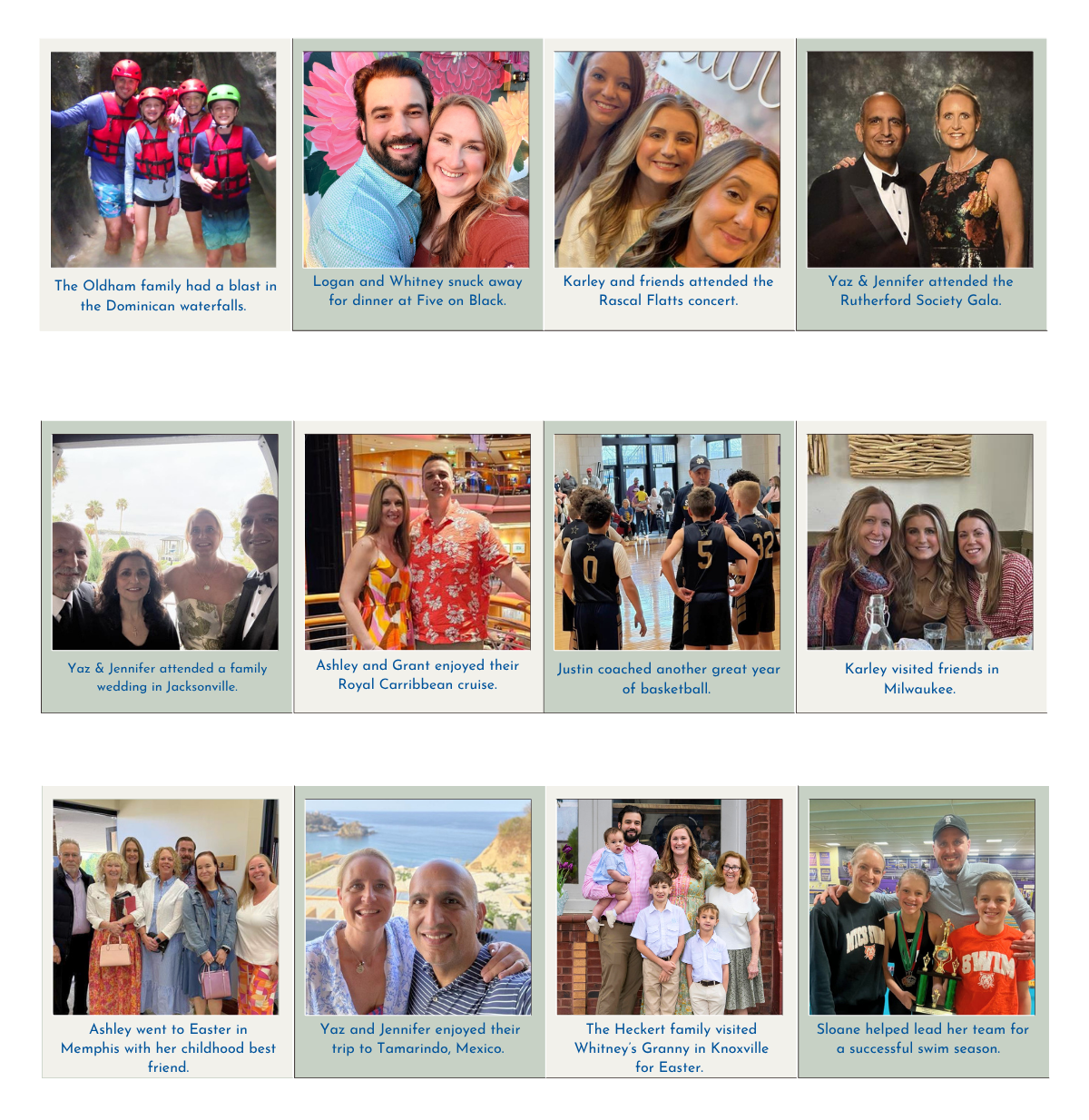
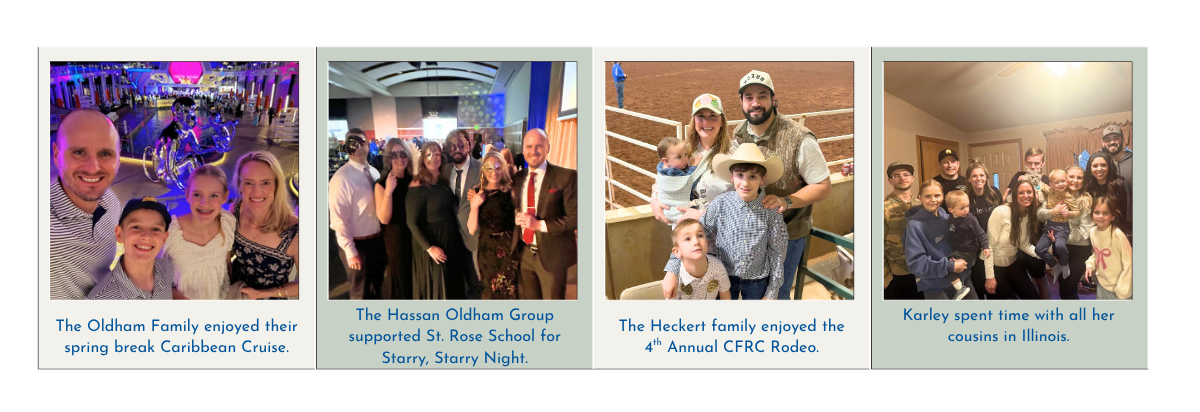
We share our lives with you because you are an extension of our family. Long-term relationships which encourage open and honest communication have been the cornerstone of our team's success for many years. Thank you for allowing us to walk alongside you and your family.
 .
.
 .
..
.
How We Define Risk
For much of the investment industry, risk is defined simply as volatility – how much a stock’s price fluctuates over time. By this definition, the elevated volatility experienced during the first quarter means risk increased. We disagree.
One of the biggest flaws in using volatility as a proxy for risk is that it is backward looking. Volatility, standard deviation, beta, and other similar measures are all calculated from past price movements. A historically volatile stock is therefore viewed as riskier than one that has been more stable. But the past does not predict the future and can sometimes be severely misleading. We believe that intelligent investing should beforward looking, not backward looking. The relevant question is not how much a stock moved in the past, but whether the underlying business is likely to be worth less in the future. A rearview mirror is a poor tool for navigating the road ahead.
There is one important caveat: time horizon matters. The shorter an investor’s time horizon, the more damaging volatility can be, regardless of the cause. An investor who needs cash in a month faces real risk from a price decline even if the business remains fundamentally sound. But over a five-, 10-, or 20-year horizon, day-to-day price fluctuations matter far less, and the growth of underlying business value matters far more.
If you operate with a long-term business owner mindset like we do, true risk is not volatility. True risk is the permanent impairment of capital – a permanent loss of fundamental business value, usually caused by fragility in the business model, the balance sheet, management actions, or the price paid.
Where We Get Our Information
Short-term stock price movements tell us virtually nothing useful about the future or about true risk. They simply tell us how other market participants are currently evaluating future uncertainty today. We get all our useful information from the underlying fundamentals of each individual business – its competitive position, cash flows, balance sheet, and management decisions – not from the daily fluctuations of its market price. These are the drivers of intrinsic value over time.
This reflects a critical distinction in our investment philosophy: the difference between market value and intrinsic value. Market value (the stock price) can be influenced by many forces unrelated to long-term business fundamentals, such as investor emotion, investor or index fund repositioning, and computer-driven algorithmic trading. Intrinsic value, by contrast, is ultimately determined by the economic success of the business itself. Over time, this success will be reflected in the stock price. As Warren Buffett has often repeated, “Price is what you pay. Value is what you get.” The two ideas are distinct –and conflating them can lead investors to erroneously draw long-term conclusions from short-term noise.
“The relevant question is not how much a stock moved in the past, but whether the underlying business is likely to be worth less in the future. A rearview mirror is a poor tool for navigating the road ahead.”
Risk in Context
Viewed through this lens, we can better frame the two key developments that dominated much of the media discussion during the quarter.
While AI is expected to improve the productivity of many businesses, it is a genuine risk to many others. This is not because it caused stock prices to decline, but because it has the potential to permanently erode the business models of companies that cannot – or will not – adapt. Technological disruption is not new. The history of capitalism is littered with it. Traditional retailers who could not adapt to the internet went out of business, and newspapers, once considered among the best business models in the world, have been decimated over the last few decades. Even though the pace of disruption feels faster today, disruption itself is a permanent feature of competitive markets and a crucial driver of human progress.
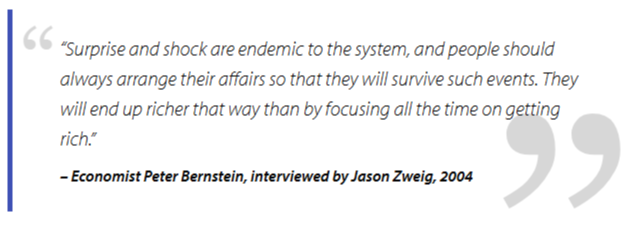
The geopolitical developments in Iran represent a different kind of risk entirely. The long-term implications for businesses are still to be determined as hostilities play out over the coming weeks or months. This event is a reminder that unpredictable shocks can and will happen without warning. History provides no shortage of examples: 9/11, the global financial crisis, and COVID‑19. We strongly believe that events like these are not consistently predictable ahead of time. The more important investment question is not whether we can forecast the next shock, but which businesses are fragile enough to be badly damaged when a shock arrives. Excessive leverage, concentrated supply chains, dependence on a single geography, or other structural weaknesses can turn a surprise event into permanent impairment.
Resilience Through Inversion
We believe it is virtually impossible to predict which risk will materialize next or when. Rather than trying to forecast specific threats, we focus on avoiding fragility.
The late Vice Chairman of Berkshire Hathaway, Charlie Munger, often said that inversion was one of the most powerful thinking tools available. So instead of asking, “How do we minimize risk?” we find it useful to ask the opposite: “How would wemaximizerisk?” If we wanted to maximize risk, we would own businesses that are:
- Burdened with extreme amounts of financial leverage
- Unprofitable, with no foreseeable path to profitability
- Lacking any discernible competitive moat
- Led by dishonest or incompetent leaders
- Excessively popular and highly priced, with no attention paid to valuation
By systematically avoiding these characteristics, we take a critical first step toward risk mitigation – but avoidance is just the start. Our investment process is designed to identify resilient businesses and avoid situations where multiple forms of fragility are layered on top of one another. This is evident in our “three‑legged stool” criteria that we use to evaluate every investment decision: business, management, and price.
We seek companies with durable competitive advantages that we understand and believe are sustainable for many years. Advantaged businesses, while not immune to disruption, have more time and flexibility to adapt as the world changes around them.
We insist on exceptional, honest leadership – CEOs who think about the firm’s capital as if it were their own. This ownership mindset often leads to leaders who anticipate change, refuse to be complacent, and position their companies to adapt and thrive through disruption rather than be consumed by it.
We demand attractive valuations, thinking and acting as if we were acquiring the entire business permanently. We attempt to build in a margin of safety in each investment (a price well below our assessment of intrinsic value). This helps to cushion against the risks we cannot foresee.
Preparing Portfolios to Withstand Risk
Risk can never be eliminated entirely. Some level of risk must be accepted in order to generate attractive long-term returns and meet your investment goals. But the large mistakes – the permanent losses of capital – tend to come not from a single isolated weakness, but from the stacking of multiple risks. Our investment process is designed specifically to avoid this.
The events of this quarter remind us that risk is always present, takes many forms, and most often arrives as a surprise. As Morgan Housel wrote in his bookSame as Ever, “The biggest risk is always what no one sees coming, because if no one sees it coming, no one’s prepared for it; and if no one’s prepared for it, its damage will be amplified when it arrives.” Our aim is not to predict which risks will emerge next, but to ensure your portfolio is built to withstand them. That means studying businesses, not stock charts; focusing on intrinsic value, not short-term price movements; and avoiding fragility wherever we find it.
Thank you for your continued trust. We strive to put forth our best efforts to help you achieve your investment goals each and every day.


